
by Mary(Clair) Birkemeier Stehman
We have made it our aim to build the best, most biologically diverse, functional and resilient
soil possible in our orchard. With soil health at the center, we make all our practical on site
decisions, regarding farming practices and inputs.
Over the years, this has led to beautiful soil here at Meridian! We had the great honor of a visit
from soil scientist Dr. Shannon Cappellazzi over the summer. Dr Cappellazzi dug into several
spots in the orchard and looked at our soil; her insights were inspiring. Really healthy,
regenerative, organically farmed soil-especially where diverse cover crops are used, looks and
feels alive. It’s dark, rich, and crumbly, often described as having a “chocolate cake” texture,
thanks to high levels of organic matter and stable aggregates. When you dig into it, you’ll
notice an earthly, slightly sweet smell caused by active microbial life. The soil is threaded with
fine roots from cover crops, and you may see earthworms, fungal strands (mycelium), and
other organisms moving through it. Instead of being compacted or dusty, it holds moisture well
while still draining easily, with plenty of pore space for air and water. A living cover crop
canopy above protects the surface, reduces erosion, and continuously feeds the soil below with
root exudates, creating dynamic, resilient system where nutrients cycle naturally and the solid
structure improves year after year. This is what we are going for!
Rotating sheep through a hazelnut orchard can be an incredibly effective and elegant way to
stack functions in a regenerative system, where soil health is the focus. As they move through
in managed rotations, the sheep naturally keep grasses and understory vegetation (like
emerging suckers) in check, reducing the need for mowing while preventing overgrowth that
can compete with trees or be problematic come harvest. At the same time, they deposit
manure and urine in a dispersed, low-impact way, feeding soil microbes and accelerating
nutrient cycling. Their hooves lightly disturb the surface, helping incorporate organic matter
and improve seed-to-soil contact for cover corps without causing compaction when properly
managed. This constant pulse of grazing and rest stimulates deeper root growth in plants,
increases plant diversity, and builds soil structure and carbon overtime. The result is a more
biologically active, resilient orchard ecosystem-where trees, livestock, and soil life work
together to enhance fertility, suppress pests and create a thriving, self-reinforcing system.
We have many obstacles to overcome here at Meridian, especially regarding filbert worm
management, fungal blights and grass overgrowth. However, our soil is beautiful! The sheep
and cover crops have been a wonderful addition to our farm, and I feel strongly like we must
keep focusing on what we are FOR, or the problems will distract us from the beauty of our mess
and overshadow the bigger picture of our aim: focus on soil health.
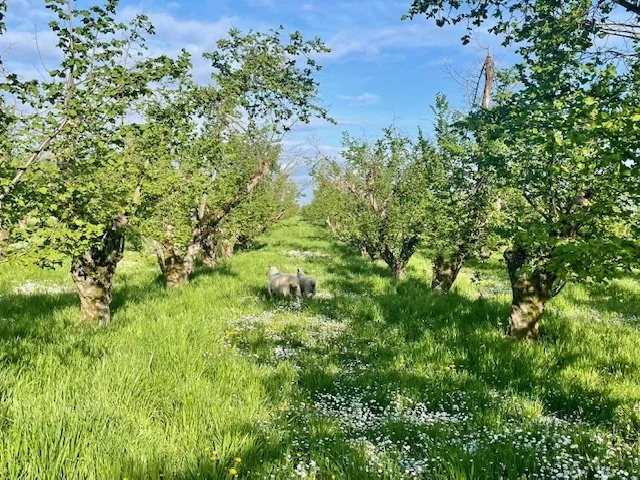
Sheep grazing in an organic hazelnut orchard at Meridian Orchards in Aurora, OR
